
Related Articles
- Invisible Threads: How Cultural Heritage Fuels Economic Growth in Off-the-Radar Communities
- How Unconventional Hobbies Can Boost Your Income: Exploring Unlikely Paths to Financial Enlightenment
- Uncommon Currents: How Waterways and Navigation Shaped Unexpected Economic Trajectories in Historical Contexts
- Whispers of Change: The Unlikely Role of Folklore in Crafting Today’s Privacy Policies and Data Protection Laws
- Surreal Shifts: The Unforeseen Role of Psychedelic Wellness in Global Consumer Preferences
- Unveiling the Financial Folly: How Conspiracy Theories Influence Market Behavior and Investor Sentiment
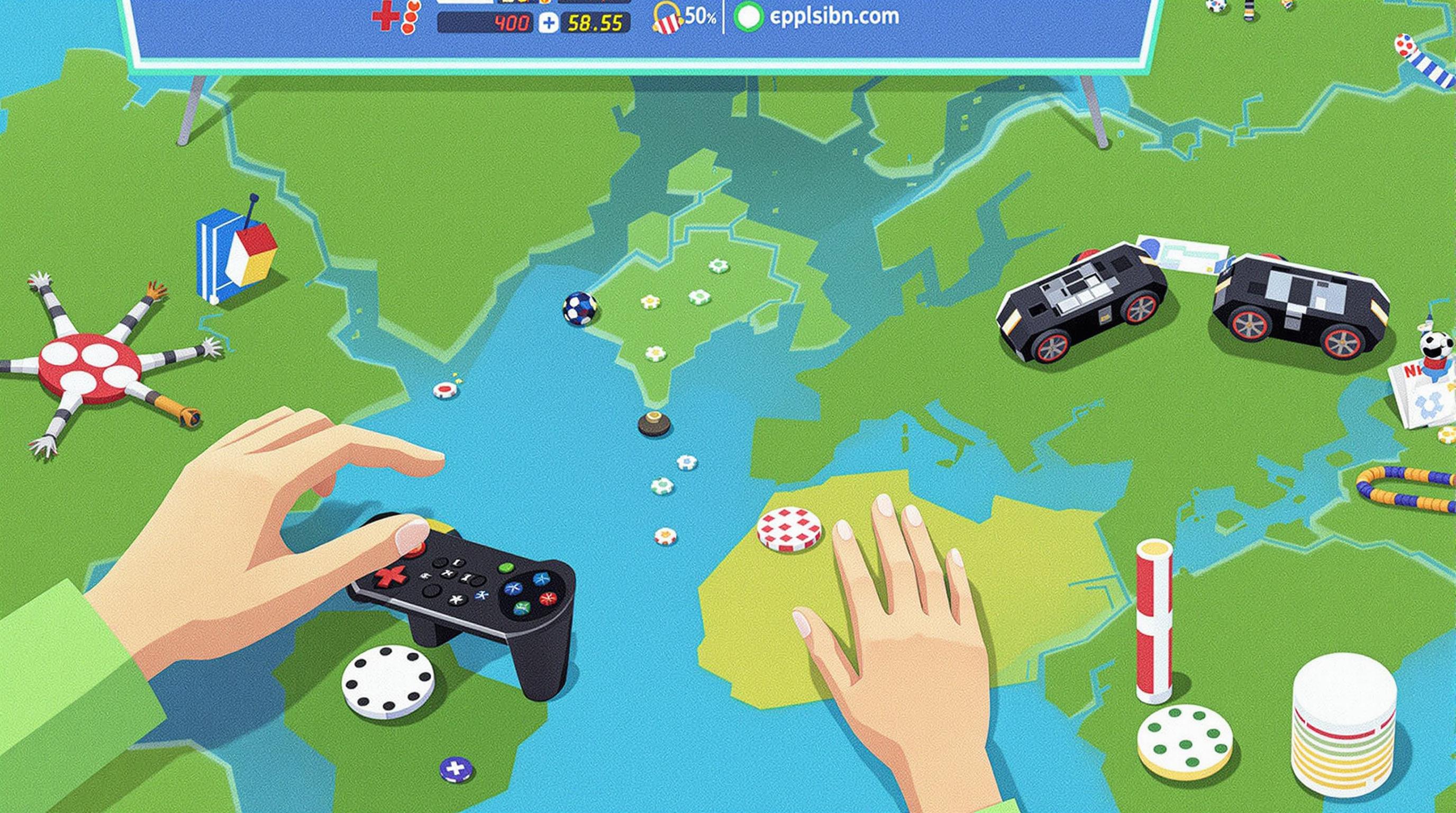
The Surprising Link Between Gaming Strategies and Real-Life Investment Decisions
The Surprising Link Between Gaming Strategies and Real-Life Investment Decisions
As video games continue to gain popularity, a surprising connection emerges between gaming strategies and real-life investment decisions. This article explores how the decision-making frameworks, risk assessment, and psychological tactics in gaming can significantly influence and enhance investment behaviors in the real world.
Leveling Up: The Gamer's Mindset
Imagine this: you’re immersed in a high-stakes video game. Each choice has dire consequences, from losing a prized possession to facing a complete game over. Similarly, in the investment world, decisions can impact your financial future. According to a study by the University of California, Irvine, individuals with gaming experience tend to have improved decision-making skills under pressure (Kelley, 2020). The pressure of a looming deadline, be it in-game or in the stock market, can actually sharpen one's focus and improve performance.
The Risk-Reward Equation
At the heart of both gaming and investing lies the risk-reward paradigm. Gamers often make calculated decisions, weighing the potential gains against the risk of loss. For example, in games like "League of Legends," players often strategize around objectives, calculating their success rate with different champions. In investment, this mirrors the process of evaluating stocks or funds based on expected ROI versus market volatility. A 2021 survey by the CFA Institute found that 60% of investors base their decisions on a similar risk-reward assessment as they would engage in gaming strategies (CFA Institute, 2021).
Case Study: The Game of Poker
One of the most notable examples of this connection is seen in poker. High-stakes poker players have a keen ability to read their opponents, assess risk, and apply strategic bluffs. Likewise, successful investors often exhibit similar traits. A study published in "The Journal of Behavioral Finance" identified poker players as particularly adept investors, partially due to their experience in managing risk and financial decision-making (Kleinman, 2018).
The Learning Curve: Trial and Error
Gamers know the value of persistence; failing a level often provides insights necessary for future success. This same perseverance is crucial in investing. According to the S&P Dow Jones Indices, around 90% of active fund managers underperform the market, teaching investors that failure can be a part of the learning process (S&P DJI, 2022). Both gamers and investors understand that learning from mistakes can lead to more informed decisions down the line.
A Personal Narrative: A Journey into Investing
At age 25, I found myself drawn to the stock market just as I was to my favorite MMORPGs. Initially, I approached investments much like I did gaming; aggressive, throwing my money into whatever seemed appealing. Much like losing a hard-fought battle against a tough boss, I learned the hard way, as my portfolio plummeted. However, through strategic thinking—breaking down my moves much like a boss fight—I began to see the light. Cultivating patience, researching stocks, and analytical thinking transformed my approach. It’s a lesson few learn without a major setback, whether in gaming or investing.
The Psychological Angle: Behavioral Finance Meets Player Psychology
The psychological aspects of gaming can offer insights into the conflicting emotions of investing. A study published in the "Journal of Psychology & Marketing" showed that emotions play a critical role in how both gamers and investors make decisions (Petersen, 2019). Gamers often exhibit behaviors like loss aversion and overconfidence, both of which also echo in the stock market. For example, the "endowment effect"—where individuals assign more value to items merely because they own them—can lead to poor investment choices. Learning to recognize these biases, as gamers do when optimizing their strategies, can lead to smarter investment decisions.
Statistics that Speak Volumes
Here's a fun fact: over 2.7 billion people worldwide play video games (Newzoo, 2021). With such a large group, it’s no wonder that the thought processes of gamers are influencing financial markets. Furthermore, a report by the Global Games Market stated that gaming revenue is expected to surpass $200 billion annually by 2023 (Newzoo, 2020). Many of these gamers, particularly millennials and Generation Z, are entering the investment scene, bringing their gaming strategies with them.
Strategizing Like a Pro
In both gaming and financial markets, the ultimate aim is winning—a healthy return on investment. Strategic planning is crucial. Gamers develop theories and adaptable strategies based on their gameplay, just as investors research market trends and adjust their portfolios. Implementing a strategy, whether it’s diversifying your assets like one might diversify gaming characters or skills, is essential. For instance, monitoring trends and allocating resources wisely can lead to growth both in-game and in investments.
The Casual Gamer: An Unexpected Investor
Meet Jake, a 19-year-old college student who spends his weekends gaming. He plays a variety of simulation games, crafting intricate cities and managing resources. One day, he stumbles upon a personal finance app and realizes the parallels between managing a city and managing investments. “It’s just like building my city,” he says, “I have to balance resources, think long-term, and prepare for fluctuations.” With this newfound understanding, Jake starts investing in small stocks, using gaming logic to guide his decisions. He combines his gaming experience with newfound investment strategies, and by 21, he’s turned a modest investment into a respectable portfolio—simply through strategic planning and adapting his gaming style to real-life investing.
Conquering Fear: Embracing Uncertainty
Whether in gaming or investing, uncertainty can be daunting. Gamers learn to take risks and sometimes lose, which builds resilience over time. This concept can help investors approach the market with a similar mindset. A report by Fidelity showed that individuals who viewed investing as a game were more likely to take calculated risks, leading to beneficial long-term gains (Fidelity Investments, 2021). The key is understanding that, much like a difficult game level, investing isn't always a straight path and involves ups and downs.
Your Own Game Plan
As you embark on your investment journey, treat it as you would a complex game. Outline strategies, roles, and objectives. Just like designing a character in a game, you design your investment approach based on your financial goals. And don't forget to level up your knowledge: read books, follow market trends, and adapt to changes. Many gamers already excel in these skills; it’s just a matter of applying them in a new realm.
Gaming and Investment Education
Interestingly, there is a growing demand for financial literacy games designed to teach principles of investing. Programs like "EconoQuest" and apps like "Investopedia Simulator" incorporate gaming elements to make learning about investments engaging and accessible. These platforms allow users to experience the market without the financial risks. It reflects a growing recognition that gaming strategies can effectively impart investment knowledge and enhance decision-making skills.
Final Thoughts: Bridging Two Worlds
The connection between gaming strategies and investment decisions is undeniably relevant. Gamers approach challenges with strategies honed through practice, and these skills are transferable to the realm of investing. Understanding risk and reward, learning from setbacks, and developing strategic decision-making can yield positive outcomes in both domains. As the lines between gaming and finance continue to blur, it’s exciting to see how these worlds will continue to influence each other as they evolve.
References
Kelley, J. (2020). The Effects of Video Games on Decision-Making. University of California, Irvine.
Kleinman, J. (2018). The Psychology of Poker: What Investors Can Learn. Journal of Behavioral Finance.
CFA Institute. (2021). Risk Assessment in Investing: A Survey Report.
Petersen, L. (2019). The Role of Emotion in Gaming and Financial Decision Making. Journal of Psychology & Marketing.
S&P Dow Jones Indices. (2022). Active Managers Underperformance Statistics.
Fidelity Investments. (2021). Risk and Reward Mindset Study.
Newzoo. (2021). Global Gaming Market Report.
Newzoo. (2020). The Future of Gaming Revenue.
Read More